---
title: Derouging Stainless Steel | Stop Rouging Stainless Steel
description: Learn about derouging of stainless steel to remove rust, discolouration, and improve corrosion resistance. Why it's important for medical industries?
---
[](https://www.inoxpassivation.co.uk/)
[](https://www.inoxpassivation.co.uk/)
- [Home](https://www.inoxpassivation.co.uk)
- About
- [Who We Are](https://www.inoxpassivation.co.uk/who-we-supply-how-we-help)
- Who We Help
- [Pharma & Medical](https://www.inoxpassivation.co.uk/passivation-process-pharmaceutical-industry)
- [Food And Beverage](https://www.inoxpassivation.co.uk/food-and-beverage-biofilm-removal)
- [Power Generation](https://www.inoxpassivation.co.uk/steel-plant-cleaning)
- Services
- [Passivation](https://www.inoxpassivation.co.uk/stainless-steel-passivation-process)
- [Derouging](https://www.inoxpassivation.co.uk/derouging-stainless-steel)
- [Oxygen Cleaning](https://www.inoxpassivation.co.uk/oxygen-cleaning-procedure)
- [Pickling & Passivation](https://www.inoxpassivation.co.uk/pickling-of-stainless-steel)
- [Biofilm Removal](https://www.inoxpassivation.co.uk/biofilm-removal)
- [Riboflavin Testing](https://www.inoxpassivation.co.uk/riboflavin-testing-for-vessels)
- [Pre-Commissioning Flushing](https://www.inoxpassivation.co.uk/chilled-water-system-flushing-procedure)
- [Carbon Steel Pickling](https://www.inoxpassivation.co.uk/pickling-of-carbon-steel-pipe)
- Resources
- [Blog](https://www.inoxpassivation.co.uk/blog)
- [FAQs](https://www.inoxpassivation.co.uk/faqs)
- [Case Study](https://www.inoxpassivation.co.uk/case-study-rapid-system-re-passivation-for-a-pharmaceutical-manufacturer)
- [Downloads](https://www.inoxpassivation.co.uk/downloads)
More results
[Prepare For Your Pharma Audit](https://www.inoxpassivation.co.uk/surface-integrity)
[Prepare For Your Pharma Audit](https://www.inoxpassivation.co.uk/surface-integrity)
- [Home](https://www.inoxpassivation.co.uk)
- About
- [Who We Are](https://www.inoxpassivation.co.uk/who-we-supply-how-we-help)
- Who We Help
- [Pharma & Medical](https://www.inoxpassivation.co.uk/passivation-process-pharmaceutical-industry)
- [Food And Beverage](https://www.inoxpassivation.co.uk/food-and-beverage-biofilm-removal)
- [Power Generation](https://www.inoxpassivation.co.uk/steel-plant-cleaning)
- Services
- [Passivation](https://www.inoxpassivation.co.uk/stainless-steel-passivation-process)
- [Derouging](https://www.inoxpassivation.co.uk/derouging-stainless-steel)
- [Oxygen Cleaning](https://www.inoxpassivation.co.uk/oxygen-cleaning-procedure)
- [Pickling & Passivation](https://www.inoxpassivation.co.uk/pickling-of-stainless-steel)
- [Biofilm Removal](https://www.inoxpassivation.co.uk/biofilm-removal)
- [Riboflavin Testing](https://www.inoxpassivation.co.uk/riboflavin-testing-for-vessels)
- [Pre-Commissioning Flushing](https://www.inoxpassivation.co.uk/chilled-water-system-flushing-procedure)
- [Carbon Steel Pickling](https://www.inoxpassivation.co.uk/pickling-of-carbon-steel-pipe)
- Resources
- [Blog](https://www.inoxpassivation.co.uk/blog)
- [FAQs](https://www.inoxpassivation.co.uk/faqs)
- [Case Study](https://www.inoxpassivation.co.uk/case-study-rapid-system-re-passivation-for-a-pharmaceutical-manufacturer)
- [Downloads](https://www.inoxpassivation.co.uk/downloads)
[Contact Us](https://www.inoxpassivation.co.uk/contact-us)
# Passivation & Derouging Of Stainless Steel
### Specialist oxygen cleaning services for pharmaceutical, medical, and high-purity systems.
[Download Your Free Derouging Guide](https://www.inoxpassivation.co.uk/derouging-guide)
## Why Derouging?
#### Removes rouge build-up that compromises stainless steel
#### Restores surface integrity for long-term system performance
#### Ensures MHRA/FDA/cGMP compliance and audit readiness
#### Prevents product contamination
## The Hidden Threats of Rouge to Stainless Steel
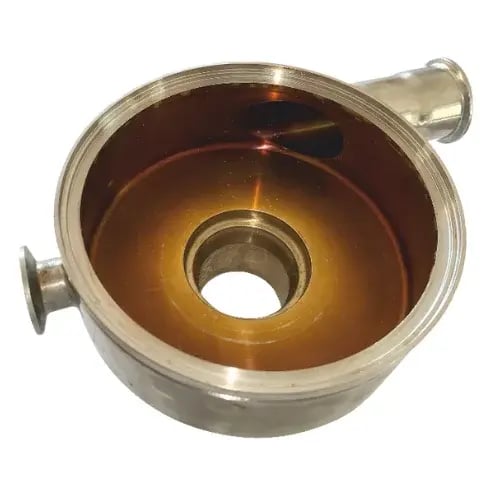
Rouge is a form of corrosion, most commonly found in high-purity water or steam systems in the pharmaceutical manufacturing industry.
cGMP, as defined by the MHRA and FDA, states that corrosion (rust or rouge) must not be present in distribution systems, tanks, vessels or equipment. Rouge can migrate through pipework and contaminate the product being manufactured. Rouge will cause deterioration of the stainless steel surface, in some cases creating an environment where pitting or biofilms can develop.
[Speak To An Expert](https://www.inoxpassivation.co.uk/speak-to-an-expert)
[](https://www.inoxpassivation.co.uk/hs/cta/wi/redirect?encryptedPayload=AVxigLLdaHfJu%2FOx%2FuHkzTMMKea6RFLJHKdNouV%2FvLiHPZuoh75e8iJoi1XSAb4ZgaYg9VKmjGxnkmPavB2mmJflzGlcaPbByL1Zfk2%2BOFrUE3pPd6f3D9qEKplJ025rJxIH%2Fr%2BCScAFJm9QJF5ZqhoI40xU2MeTXJouKYY7015Mgs6ZyFO0WD0tl0QN4LVM8UJIvlA7umKs4r1TexxYMeDONxW6JivKaXVNm1ySxwnz1zRWzeVP1cRnYfX2tfw%3D&webInteractiveContentId=211073839331&portalId=144263954)
## Efficient Derouging: Safely Targeting Contaminants While Reducing Waste and Disposal Costs
Our derouging process uses Ateco pH neutral chemistry that selectively targets the rouge without removing material from the underlying surface. In many cases, the derouging and passivation chemicals can be discharged directly to the client drainage system, thereby eliminating the storage of hazardous materials and associated disposal costs
[Request A Quote](https://www.inoxpassivation.co.uk/request-a-quote)
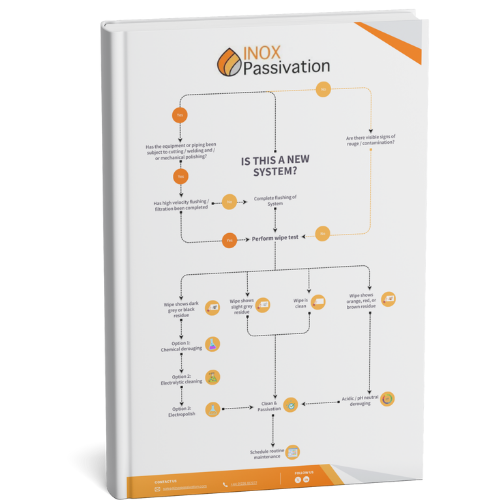
## Download the 5 Main Steps to Derouging Guide
Unsure about the best way to tackle rouge in your systems? Our free guide explains the 5 key steps to restoring stainless steel integrity and staying in line with industry standards
Inside, you’ll discover:
1. The science behind rouge formation
2. Step-by-step treatment and prevention
3. How derouging supports audit readiness
4. Practical tips to extend equipment life
Download your free guide today and take control of rouge contamination.
[](https://www.inoxpassivation.co.uk/hs/cta/wi/redirect?encryptedPayload=AVxigLJr4P5PzukbSEpd61tOZB0fncEmKmbLUPsExAu4t31XLvsV7KDxhSzrf9Tz2o97VByWjVcQ%2B5C818lr6emcqPtBl1ugkKYZgLboEcYsTl0Hdu8rXQoVhqk30tzE%2F6CaRtcFF0Xu0O%2BY%2FLHpyWIyQ%2FptkDwJ429IYFZjf0MVHML0rZAjiW%2BaNR2Nn8gDe2pB70EqnVzSVzfBC9I%2FAINy7WXngHuqwkldfvkuWQIQVgw6HpIkimAdAw1J7Ao%3D&webInteractiveContentId=118552629462&portalId=144263954)
## The Derouging And Passivation Process
---
## Frequently Asked Questions
What is rouge / derouging?
Rouge is a catch-all expression to describe the discolouration that forms on stainless steel surfaces – usually in high-purity water or steam systems. The discolouration varies from a pale yellow-orange, through to red-brown and onto a dark violet-black. It is composed of a complicated lattice made up from different iron oxides/hydroxides.
How do I know if I’ve got rouge?
In most cases, rouge is identified during a visual inspection. A discoloured surface, typically yellow- orange-red appears first. Depending on the environment, this could also be a darker red/brown and even purple-black stain. The lighter coloured forms of rouge can often be picked up during swab- testing. In most cases, this will simply discolour the swab. Rouge can not normally be cleaned by simply wiping it off.
What will rouge do to my equipment/system if I just leave it?
Rouge is a form of corrosion. If left untreated, it will spread throughout the system and interfere the formation of the passive film, leaving the stainless exposed to issues such as pitting. Rouge will also increase the surface roughness of the surface, and provide a site for biofilms to adhere.
Rouge will migrate around the system and in the worst case scenario, contaminate your product.
Will derouging damage my equipment/system?
Derouging with Ateco pH neutral products will not damage your equipment or system. Derouging with traditional strong acids (including sulphuric acid, hydrofluoric acid, ammonium bifluoride, nitric acid, etc.) run a high risk of damaging your equipment. These products can etch the surface finish, ruining polished surfaces and significantly reduce the operational life-span of your polymers and elastomers.
Will rouge come back after it has been cleaned?
Unfortunately, it is likely that rouge will come back. Rouge is an unavoidable consequence of using ultra-pure water/steam in an austenitic stainless steel system. The formation of rouge can be mitigated by the quality of the base material, the quality of the surface finish and a well executed passivation process, but these do not guarantee a rouge-free life.
A planned preventative maintenance program including derouging and passivation will keep rouge at bay, or at the very least, capture it when it is in the very early stages of development. The longer rouge is left to form, the tougher it can be to remove.
How long does the derouging process take?
This is very subjective and can be affected by many things, including the complexity of the system and severity of the rouge. In most cases, a fairly typical WFI loop and storage vessel can be fully degreased, derouged and passivated within 1 to 2 days.
What is the difference between derouging and pickling?
Derouging with pH neutral products does not etch the surface of stainless steel. The process is designed to target the iron-oxide/hydroxides that form the rouge, leaving the underlying polished surfaces in pristine condition.
Pickling is generally specified when the component needs scale, weld-heat-tint and metallic contamination removing. It etches the surface (and therefore is not suitable for polished finishes). Pickling products contain hydrofluoric acid or ammonium bifluoride. Be very wary if your derouging contractor recommends these products for derouging your pharmaceutical equipment.
What is the difference between derouging and passivation?
Derouging removes tightly adhered corrosion. Passivation removes loosely adhered ferrous contaminants – then helps to reform the chrome-oxide layer.
Passivation is required after derouging.
[Back to top](https://www.inoxpassivation.co.uk/derouging-stainless-steel#top)

## Speak To An Expert
### Submit A Question Or Enquiry And Speak To One Of Our Experts To Find Out More!
Submit an enquiry with your question, to give us a brief or to request a call back from one of our experts.
**When you get in touch with INOX:**
We'll contact you back as soon as we are able to
We'll always aim to provide 'best advice' for your business
We offer a free initial consultation
Your information is treated in the strictest confidence
**You can ask us for advice or help on any or all of the following: **
- Passivation
- Derouging
- Oxygen Cleaning
- Biofilm Removal
- Riboflavin Testing
- Pre-Commissioning Flushing
- Carbon Steel Pickling
**Simply confirm your details on the form provided and we'll be in touch ASAP. We look forward to hearing from you!**
Related Articles
## From Our Blog
[Why Citric Acid Is Used For Passivation of Stainless Steel](https://www.inoxpassivation.co.uk/blog/citric-acid-passivation-stainless-steel)
[Passivation Of Stainless Steel](https://www.inoxpassivation.co.uk/blog/tag/passivation-of-stainless-steel)
#### Why Citric Acid Is Used For Passivation of Stainless Steel
September 24, 2026 1 min read
[The Benefits Of Chemical Cleaning For Stainless Steel Equipment](https://www.inoxpassivation.co.uk/blog/what-are-the-benefits-of-stainless-steel-chemical-cleaning)
[Passivation Of Stainless Steel](https://www.inoxpassivation.co.uk/blog/tag/passivation-of-stainless-steel)
#### The Benefits Of Chemical Cleaning For Stainless Steel Equipment
September 17, 2026 2 min read
[6 Key Main Differences Between ASTM A380 vs A967 Passivation Processes](https://www.inoxpassivation.co.uk/blog/differences-between-astm-a380-vs-a967)
-1.png)
[Passivation Of Stainless Steel](https://www.inoxpassivation.co.uk/blog/tag/passivation-of-stainless-steel)
#### 6 Key Main Differences Between ASTM A380 vs A967 Passivation Processes
September 8, 2026 2 min read
[Subscribe to Our Blog](https://www.inoxpassivation.co.uk/blog)
---
[](https://www.inoxpassivation.co.uk/)
[sales@inoxpassivation.com](mailto:sales@inoxpassivation.com)
[+44 01226 107077](tel:+441226107077)
Business Village
Innovation Way
Barnsley
S75 1JL
- 
- 
About
- Who We Supply & How We Help
Who We Help
- [Pharma & Medical](https://www.inoxpassivation.co.uk/passivation-process-pharmaceutical-industry)
- [Food & Beverage](https://www.inoxpassivation.co.uk/food-and-beverage-biofilm-removal)
- [Power Generation](https://www.inoxpassivation.co.uk/steel-plant-cleaning)
Services
- [Passivation](https://www.inoxpassivation.co.uk/stainless-steel-passivation-process)
- [Derouging](https://www.inoxpassivation.co.uk/derouging-stainless-steel)
- [Oxygen Cleaning](https://www.inoxpassivation.co.uk/oxygen-cleaning-procedure)
- [Pickling & Passivation](https://www.inoxpassivation.co.uk/pickling-of-stainless-steel)
- [Biofilm Removal](https://www.inoxpassivation.co.uk/biofilm-removal)
- [Riboflavin Testing](https://www.inoxpassivation.co.uk/riboflavin-testing-for-vessels)
- [Pre-commission Flushing](https://www.inoxpassivation.co.uk/chilled-water-system-flushing-procedure)
- [Carbon Steel Pickling](https://www.inoxpassivation.co.uk/pickling-of-carbon-steel-pipe)
Resources
- [Blogs](https://www.inoxpassivation.co.uk/blog)
- Testimonials
- [Case Study](https://www.inoxpassivation.co.uk/case-study-rapid-system-re-passivation-for-a-pharmaceutical-manufacturer)
- [FAQs](https://www.inoxpassivation.co.uk/faqs)
- [Contact Us](https://www.inoxpassivation.co.uk/contact-us)
- [Chemical Passivation: The Process](https://www.inoxpassivation.co.uk/chemical-passivation-of-stainless-steel-pillar-page)
Copyright © 2026 INOX Passivation. Website by [JDR Group](https://www.jdrgroup.co.uk/)
- [Terms and Conditions](https://144263954.hs-sites-eu1.com/terms-and-conditions)
- [Cookie Policy](https://144263954.hs-sites-eu1.com/cookie-policy)
- [Privacy Policy](https://144263954.hs-sites-eu1.com/privacy-policy)
- [Terms and Conditions of Hire](https://www.inoxpassivation.co.uk/terms-and-conditions-of-hire)
- Company Number: 12055500
- VAT: 330802244
```json
{
"@context" : "https://schema.org",
"@type" : "LocalBusiness",
"address" : {
"@type" : "PostalAddress",
"addressCountry" : "UK",
"addressLocality" : "Barnsley",
"postalCode" : "S75 1JL",
"streetAddress" : "Innovation Way, Business Village"
},
"alternateName" : "Inox Passivation",
"contactPoint" : {
"@type" : "ContactPoint",
"areaServed" : "GB",
"availableLanguage" : "en",
"contactType" : "customer service",
"telephone" : "+44 1226 107077"
},
"geo" : {
"@type" : "GeoCoordinates",
"latitude" : 53.5511,
"longitude" : -1.5016
},
"image" : "https://www.inoxpassivation.co.uk/hs-fs/hubfs/who%20we%20supply%20and%20who%20we%20help.webp",
"logo" : "https://www.inoxpassivation.co.uk/hs-fs/hubfs/Images/InoxPassivation-Logo.webp?width=275&height=79&name=InoxPassivation-Logo.webp",
"name" : "Inox Passivation Ltd",
"openingHours" : [ "Mo 09:00-18:00", "Tu 09:00-18:00", "We 09:00-18:00", "Th 09:00-18:00", "Fr 09:00-18:00", "Sa Closed", "Su Closed" ],
"priceRange" : "£",
"sameAs" : [ "https://x.com/PassivationInox", "https://www.linkedin.com/company/inox-passivation/" ],
"telephone" : "+44 01226 107715",
"url" : "https://www.inoxpassivation.co.uk/"
}
```
```json
{
"@context" : "http://schema.org",
"@type" : "VideoObject",
"description" : "The passive layer of the steel surface forming with time a rust-red layer, called Rouging. DIRUNEUTRA - the new detergent on a neutral basis, now allows you a more economical remove of the Rouging.",
"duration" : "PT2M12S",
"embedUrl" : "https://www.youtube.com/embed/bKzfqb8d7BY",
"interactionCount" : "1638",
"name" : "pH-neutral derouging and passivation afterwords – ATECO TOBLER AG",
"thumbnailUrl" : "https://i.ytimg.com/vi/bKzfqb8d7BY/default.jpg",
"uploadDate" : "2016-01-29T10:31:11Z"
}
```
```json
{
"@context" : "https://schema.org",
"@type" : "WebPage",
"description" : "Learn about derouging of stainless steel to remove rust, discolouration, and improve corrosion resistance. Why it's important for medical industries?",
"inLanguage" : "en-GB",
"name" : "Derouging Stainless Steel | Stop Rouging Stainless Steel ",
"publisher" : {
"@type" : "Organization",
"logo" : {
"@type" : "ImageObject",
"url" : "https://www.inoxpassivation.co.uk/hs-fs/hubfs/Images/InoxPassivation-Logo.webp"
},
"name" : "Inox Passivation Ltd",
"url" : "https://www.inoxpassivation.co.uk/"
},
"url" : "https://www.inoxpassivation.co.uk/derouging-stainless-steel"
}
```
```json
{
"@context" : "https://schema.org",
"@type" : "BreadcrumbList",
"itemListElement" : [ {
"@type" : "ListItem",
"item" : "https://www.inoxpassivation.co.uk/",
"name" : "Home",
"position" : 1
}, {
"@type" : "ListItem",
"item" : "https://www.inoxpassivation.co.uk/derouging-stainless-steel",
"name" : "Derouging",
"position" : 2
} ]
}
```